 By Crash News Writer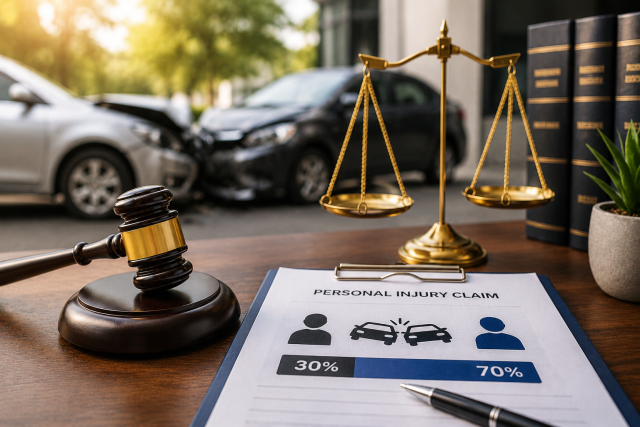
Being partly responsible for an accident does not always mean you lose your right to compensation. Depending on where the accident happened and the law that applies, you may still be able to recover some of your losses even when your own actions contributed to your injuries.
This is where comparative negligence personal injury rules become important. These rules help courts and insurance companies determine what happens when two or more people share responsibility for an accident.
Shared fault can affect how much compensation you receive, and state laws vary considerably. Understanding how these rules work can help you make informed decisions and avoid giving up on a possible claim simply because you believe you made a mistake.
What Does Comparative Negligence Personal Injury Mean?
Comparative negligence personal injury law addresses situations where an injured person and another party both contributed to an accident. Instead of placing 100% of the responsibility on one person, fault can be divided among those involved.
Imagine that another driver ran a red light and hit your vehicle. However, evidence shows you were speeding immediately before the collision. Depending on state law and the facts, both drivers might receive a percentage of fault.
Cornell Law School explains that comparative negligence generally reduces a plaintiff’s recovery according to the plaintiff’s degree of negligence.
The exact result depends on the comparative negligence system used by the state where your case is handled.
How Does Shared Fault Affect Your Compensation?
Under comparative negligence personal injury rules, your percentage of responsibility can directly affect the compensation you may receive.
Suppose your legally recognized damages total $100,000. If you are found 20% responsible and the applicable law permits recovery, your award could potentially be reduced by 20%, leaving $80,000.
That basic example sounds straightforward, but real cases can become much more complicated. Parties may disagree about the total damages as well as each person’s percentage of responsibility.
Insurance companies may also investigate fault before making a settlement offer. Understanding comparative fault in a personal injury case can help you see why evidence about the accident can become so important.
Pure Comparative Negligence Explained
One form of comparative negligence personal injury law is known as pure comparative negligence.
Under a pure comparative negligence system, an injured person can generally recover damages even when assigned a high percentage of responsibility. The amount recovered is reduced according to that person’s share of fault.
For example, suppose your damages are $50,000 and you are determined to be 70% responsible. Under a pure comparative negligence approach, you could potentially recover the remaining 30%, or $15,000.
Not every state follows this system. You should therefore avoid assuming that this example applies to your accident.
Modified Comparative Negligence Can Create a Cutoff
Many states use some form of modified comparative negligence personal injury rules. Unlike pure comparative negligence, modified systems generally establish a fault threshold that can prevent recovery once an injured person’s responsibility reaches a certain level.
The exact threshold varies by jurisdiction.
In one type of system, a person may be barred from recovery when their fault reaches 50%. Another approach may permit recovery at 50% fault but prevent it when the person’s responsibility exceeds 50%.
That difference can have a major financial impact. Even a small change in the percentage assigned to you could determine whether you receive reduced compensation or are prevented from recovering under the applicable rule.
What Is Contributory Negligence?
Not every jurisdiction applies comparative negligence personal injury principles in the same way. A small number of jurisdictions continue to use contributory negligence rules.
Contributory negligence can be much stricter for injured people. Under this approach, a plaintiff who contributed to the injury may be barred from recovering damages, subject to the particular jurisdiction’s laws and exceptions.
That makes location an important part of evaluating a claim.
If you are unsure which rule applies, do not rely on information about another state’s laws. The law governing your particular accident should be reviewed before drawing conclusions about your rights.
How Is Your Percentage of Fault Determined?
Comparative negligence personal injury cases often depend heavily on evidence. An insurance company, judge, or jury may examine what each person did before and during the accident.
In a motor vehicle case, relevant evidence could include photographs, traffic camera footage, vehicle damage, witness statements, police reports, and information about traffic signals or road conditions. Medical documentation can help establish the injuries and losses resulting from the crash.
Other injury cases require different evidence. In a premises liability claim, for example, photographs of the dangerous condition, maintenance records, surveillance footage, and witness statements could become important.
Preserving evidence early may help provide a clearer picture of what actually happened.
What If an Insurance Company Says You Were Partly Responsible?
An insurer’s initial position does not necessarily provide the final answer about comparative negligence personal injury liability.
Insurance adjusters investigate claims and may reach conclusions about how an accident occurred. If an insurer argues that you were partly responsible, that position could reduce the settlement amount it is willing to offer.
You should carefully review the evidence before accepting a fault percentage. Accident reports, photographs, video, witness accounts, and other information may provide additional context.
It is also wise to be careful when discussing the accident. A statement made shortly after an incident could later become part of a disagreement about fault.
Can Your Own Statements Affect a Shared-Fault Case?
Yes. What you say following an accident may become relevant in a comparative negligence personal injury dispute.
You should provide necessary factual information, but avoid guessing about details you do not remember. Statements such as “I should have seen them” or “maybe I was going too fast” could potentially create questions about your actions even when you do not yet know all the facts.
Social media deserves similar caution. Photos, comments, check-ins, and descriptions of the accident may be reviewed during a disputed claim.
Sticking to accurate information and keeping important records can help prevent unnecessary confusion.
Does Partial Fault Affect Every Type of Damage?
Comparative negligence personal injury rules generally affect the overall amount recoverable when comparative fault applies, but the types of damages available depend on the case and state law.
Potential damages can include medical expenses, lost income, certain future financial losses, and property-related losses when applicable. Some cases may also include noneconomic damages for consequences such as physical pain and emotional suffering.
The value of a claim depends on much more than a percentage of fault. The seriousness of your injuries, medical treatment, ability to work, insurance coverage, evidence, and applicable legal rules may all matter.
Our guide to personal injury case value and important factors explains some of the issues that may influence an injury claim.
Should You Accept an Insurance Company’s Fault Decision?
You do not necessarily have to agree with an insurer’s assessment of comparative negligence personal injury responsibility.
Suppose an insurer claims you were 40% responsible for a crash. Evidence from a nearby camera later shows that the other driver made a dangerous maneuver that was not apparent immediately after the accident. That new information could change how responsibility is evaluated.
This is why collecting and preserving evidence can be important before resolving a disputed claim.
You can also review accident and injury resources to learn more about insurance claims, legal rights, and issues that can arise following an injury.
Why Acting Quickly Can Help a Shared-Fault Claim
Evidence is particularly important when comparative negligence personal injury allegations arise. The longer you wait, the harder some evidence may become to obtain.
Surveillance video can be erased. Witnesses can become difficult to locate. Road conditions may change, damaged property can be repaired, and memories can become less clear.
You should also pay attention to legal filing deadlines. Every state has laws governing how long an injured person generally has to bring certain claims, and special circumstances can create different deadlines.
Taking action early gives you more time to understand the evidence and the legal rules that could affect your case.
Frequently Asked Questions
Shared responsibility can make an injury claim confusing, especially when an insurance company assigns you some percentage of fault. These common questions explain several important comparative negligence personal injury concepts.
Can I recover compensation if I was partly at fault?
Possibly. Whether you can recover depends on the law that applies and your percentage of responsibility. Some states allow reduced recovery even at high percentages of fault, while others establish a cutoff.
Who decides what percentage of fault I have?
The answer depends on how the claim is resolved. Insurance companies may assign percentages during settlement negotiations, but those positions can be disputed. If a lawsuit proceeds to trial, a judge or jury may ultimately determine responsibility under applicable law.
Does being 50% at fault mean I automatically lose?
Not necessarily. The result depends on the comparative negligence personal injury rule used in the jurisdiction handling your case. Because states use different thresholds, you should verify the law that applies before assuming you cannot recover.
Can more than two people share responsibility?
Yes. Some accidents involve several potentially responsible people or businesses. The law may require responsibility to be allocated among multiple parties, depending on the facts and jurisdiction.
What should I do if an insurer blames me for the accident?
Review the evidence and avoid assuming the insurer’s position is final. Preserve photographs, reports, medical documents, witness information, and other records that may help establish what happened. Consider seeking legal guidance if fault or significant damages are disputed.
Protect Your Rights When Fault Is Disputed
Comparative negligence personal injury law can make a case more complicated, but being partly responsible does not necessarily mean you have no options. The law in your jurisdiction, your percentage of fault, available evidence, and the extent of your damages can all affect the outcome.
Do not assume that an insurance company’s first fault determination settles the issue. Preserve evidence, keep accurate records, understand your filing deadlines, and learn which shared-fault rule applies where the accident happened.
If you or your loved one was injured and responsibility for the accident is disputed, speaking with a qualified personal injury attorney can help you understand how the law applies to your circumstances. Getting reliable information early may help you protect your rights and make better decisions about your next steps.