 By Crash News Writer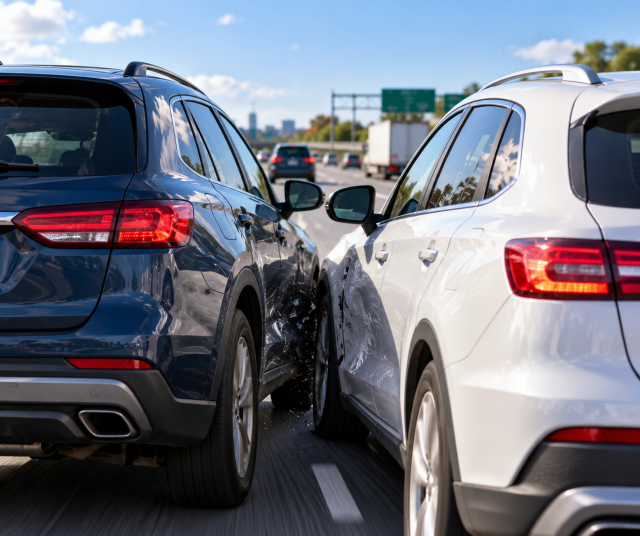
A lane-change or merging accident can happen in an instant. You may be driving normally when another vehicle suddenly moves into your lane. In other cases, two drivers may try to enter the same lane at almost the same time. After the collision, both drivers might insist they had the right of way.
Determining lane change accident fault usually requires looking at what each driver did before the crash. Traffic laws, vehicle positions, turn signals, speed, blind spots, witness statements, and video footage can all matter.
Although the driver changing lanes is often responsible for making sure the move can be completed safely, that does not mean this driver is automatically at fault. Every accident has its own facts, and sometimes responsibility can be shared.
How Is Lane Change Accident Fault Determined?
Drivers generally have a duty to make sure a lane change can be completed safely. Before moving into another lane, a driver should check mirrors, look for vehicles in blind spots, signal appropriately, and make sure there is enough space.
State traffic laws provide specific rules. For example, New York law says a vehicle should not move from its lane until the driver has first determined that the movement can be made safely. New York Senate — Vehicle and Traffic Law § 1128
When investigating lane change accident fault, an insurance company may ask several questions. Which vehicle was changing lanes? Did the driver signal? Were both vehicles attempting to merge? Was either driver speeding? Did someone cross multiple lanes suddenly?
The answers can help establish which driver’s actions caused the collision.
When Is the Driver Changing Lanes Usually at Fault?
In many cases, the driver leaving an established lane has the greater responsibility to make sure the new lane is clear.
Imagine you are traveling straight in the center lane of a highway. Another driver in the right lane moves left without checking a blind spot and strikes the passenger side of your vehicle. Evidence showing that you remained in your lane while the other vehicle moved into it could support a finding that the other driver caused the crash.
This is one common lane change accident fault situation.
Drivers may also be responsible when they fail to signal, weave aggressively between lanes, move across several lanes at once, or change lanes when there is not enough room.
However, the fact that someone was changing lanes does not settle every case. Investigators must consider the actions of everyone involved.
Who Has the Right of Way When Merging?
Merging accidents can be more complicated because traffic patterns differ depending on the road.
When entering a highway from an entrance ramp, a merging driver generally needs to adjust speed and find a safe opening in traffic. Drivers already traveling on the highway may have the right of way under applicable state law, although they still must drive reasonably and obey traffic rules.
New York’s Driver’s Manual instructs drivers entering an expressway to use the acceleration lane to match traffic speed and merge when it is safe. It also explains that drivers already on the expressway should move over when safe to help entering traffic. New York State Driver’s Manual — Expressway Driving
As a result, lane change accident fault in a merging crash depends heavily on how the vehicles entered the lane and what opportunities each driver had to avoid the collision.
Can the Driver Already in the Lane Be Responsible?
Yes. Being established in a lane does not give a driver permission to act carelessly.
Suppose another vehicle is safely merging ahead of you, but you accelerate aggressively to prevent that driver from entering. If your actions contribute to a collision, they could become important evidence when liability is investigated.
A driver already in the lane might also contribute to an accident by speeding, driving while distracted, following too closely, or intentionally blocking another vehicle.
These situations demonstrate why lane change accident fault cannot always be decided simply by identifying which vehicle was moving between lanes.
Can Both Drivers Be at Fault?
Sometimes both drivers contribute to a collision. How that affects a claim depends on the laws of the state where the accident occurred.
For example, one driver might make an unsafe lane change while the other is speeding. Investigators could determine that both actions contributed to the impact.
Understanding your rights in a shared-fault car accident can help you see why percentages of responsibility may become important. You can also learn more about how comparative fault can affect a personal injury case when more than one person may have contributed to a crash.
When lane change accident fault is disputed, evidence becomes especially important.
What Evidence Can Prove Fault After a Lane-Change Accident?
Drivers frequently disagree about what happened during a merging collision. One person might say the other vehicle suddenly entered the lane, while the other driver claims there was plenty of room.
Photographs can help show the location and type of vehicle damage. Pictures of the roadway can also document lane markings, traffic signs, merge areas, and road conditions.
Dashcam video can be even more useful. It may show whether a vehicle drifted across a lane line, made a sudden maneuver, or attempted an unsafe merge.
Nearby businesses or traffic cameras might also have recorded the collision. Because some video systems automatically overwrite recordings, requesting footage quickly can be important.
Witnesses may provide another independent account. A person traveling behind the vehicles could have seen which driver changed lanes immediately before impact.
This evidence may provide a clearer picture of lane change accident fault than the drivers’ statements alone.
Does Vehicle Damage Show Who Changed Lanes?
Vehicle damage can provide clues, but it rarely tells the entire story by itself.
For example, damage along the side of one vehicle and the front corner of another might help an investigator understand the direction each vehicle was moving. Scrape marks could also indicate that two vehicles traveled alongside one another during part of the collision.
However, damage patterns can be interpreted in different ways. Investigators may compare vehicle damage with photographs, statements, video, roadway evidence, and other information.
You should therefore avoid assuming that one damage pattern automatically proves lane change accident fault.
What Should You Do After a Lane-Change or Merging Crash?
Your first priority should be safety. If anyone may be injured, request emergency assistance. Move to a safe location when appropriate and when doing so will not create another hazard.
When possible, take photographs of both vehicles before they are moved. Include wide photographs showing the road, lanes, merge area, signs, and surrounding intersection or highway.
Exchange contact and insurance information with the other driver and obtain witness information when possible. Depending on applicable law and the circumstances, you may also need to report the accident to law enforcement.
Avoid arguing about responsibility at the scene. You may not yet know everything that contributed to the crash.
Our accident resources can provide additional information as you decide what steps to take following a collision.
How Does Insurance Determine Lane Change Accident Fault?
Insurance adjusters may review police reports, driver statements, photographs, repair estimates, videos, witness accounts, and traffic laws when investigating a claim.
The adjuster might also ask detailed questions about the moments before impact. Where was your vehicle? Were you changing lanes? Did you see the other car? Did either vehicle signal? How fast were you traveling?
Answer truthfully, but avoid guessing when you do not know something.
An insurer may decide that one driver was completely responsible or argue that both drivers contributed to the accident. If you were injured, these decisions could affect a potential personal injury claim.
Understanding how the insurance company reached its decision can be particularly important when you disagree with its assessment.
Why Blind Spots Matter in Lane-Change Accidents
Blind spots are a major concern whenever drivers change lanes. Even properly adjusted mirrors may not show every vehicle traveling beside you.
Drivers should therefore check their surroundings carefully before moving into another lane. A quick shoulder check can help identify a vehicle that is difficult to see in a mirror.
Large commercial trucks can have particularly significant blind spots. Drivers traveling near trucks should understand that the truck driver may have difficulty seeing vehicles beside or immediately behind the truck.
A blind spot can explain how an accident happened, but it does not automatically excuse an unsafe lane change. Drivers still have a responsibility to determine whether a maneuver can be completed safely.
That responsibility can become a major issue when establishing lane change accident fault.
What If the Other Driver Says You Changed Lanes?
Disputed lane-change cases can become a situation where each driver’s story is completely different.
If the other driver claims you entered their lane, objective evidence becomes extremely valuable. Dashcam footage, surveillance video, witnesses, vehicle damage, and roadway markings could help support your version of events.
Write down everything you remember as soon as possible. Include your lane, direction of travel, approximate speed, traffic conditions, and where you first noticed the other vehicle.
Do not change your account merely because an insurer challenges it. Give accurate information and rely on available evidence whenever possible.
Frequently Asked Questions
Lane-change and merging collisions can raise difficult questions because the vehicles are often moving beside each other before impact. Here are answers to several common questions about responsibility after these crashes.
Is the Driver Changing Lanes Always at Fault?
No. The driver changing lanes often has a duty to make sure the maneuver is safe, but lane change accident fault depends on the complete circumstances. Another driver’s speeding, unsafe maneuver, or other negligent conduct may also contribute to the crash.
Who Is at Fault When Two Cars Merge Into the Same Lane?
Either or both drivers could potentially be responsible. Investigators may consider which vehicle began moving first, where each vehicle started, whether signals were used, and whether either driver had an opportunity to avoid the crash. Video and witness statements can be especially useful in these cases.
Does Failing to Use a Turn Signal Prove Fault?
A missing turn signal can be important evidence, but it may not automatically establish responsibility for the entire collision. Investigators still need to determine whether the failure contributed to the crash and consider the other driver’s actions. State traffic laws can also affect the analysis.
Can Dashcam Video Help Prove Fault?
Yes. Dashcam footage may show vehicle positions, lane markings, traffic conditions, signals, and the movements immediately before impact. Clear video can be particularly valuable when drivers give conflicting accounts.
Can I Recover Compensation If I Share Fault?
Possibly, depending on the laws where the collision happened. Some states allow an injured person to recover compensation even when that person shares some responsibility, while the applicable rules and limits vary. Getting legal advice based on your specific location and circumstances can help you understand your options.
Protect Your Rights After a Lane-Change or Merging Accident
A lane-change collision may look straightforward, but disputes about vehicle positions, signals, speed, and right of way can quickly complicate a claim. Determining lane change accident fault requires examining the evidence rather than automatically blaming the driver who appears to have been merging.
If you or a loved one has been injured, preserve photographs, reports, medical records, witness information, and any available video. Acting quickly can help prevent valuable evidence from disappearing.
You can also speak with a qualified personal injury attorney to better understand your rights, applicable deadlines, insurance issues, and options for pursuing compensation after a lane-change or merging collision.