 By Crash News Writer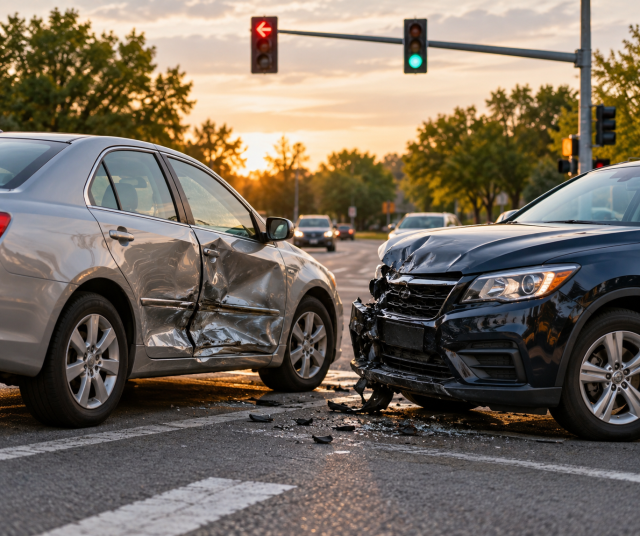
Left-turn crashes can happen in seconds, but figuring out who caused the collision may take much longer. One driver may say the other vehicle was speeding. The other may claim the turning driver failed to yield. When the stories conflict, understanding left-turn accident fault becomes an important part of protecting your rights.
In many situations, the driver making the left turn must yield to vehicles coming from the opposite direction. For example, New York law requires a driver turning left to yield to an approaching vehicle that is already in the intersection or is close enough to create an immediate hazard. Other states have their own traffic and negligence laws, so the exact rules that apply to your accident depend on where the collision happened.
That also means the left-turning driver is not automatically responsible for every crash. Traffic signals, speeding, distracted driving, witness statements, and other evidence can change the outcome.
How Is Left-Turn Accident Fault Usually Determined?
The basic question in a left-turn collision is often who had the right of way. A driver preparing to turn left across opposing traffic generally needs to wait until the turn can be completed safely.
The New York State Driver’s Manual, for example, explains that a driver turning left generally must yield to traffic traveling straight from the opposite direction. It also notes that drivers making a left turn into a driveway, parking lot, or similar location must yield to approaching traffic.
Because of rules like these, left-turn accident fault often falls on the turning driver when that person crosses directly into the path of an approaching vehicle.
However, right of way does not answer every question. Investigators may also look at what the other driver was doing before impact. A driver who was speeding, running a traffic signal, or otherwise driving unsafely may bear some or all of the responsibility.
Why the Left-Turning Driver Is Often Considered Responsible
Left turns are challenging because a driver must cross lanes that may contain moving traffic. The turning driver has a responsibility to judge the distance and speed of approaching vehicles before moving across their path.
Imagine you are waiting to turn left at a busy intersection. You see an approaching vehicle but believe you have enough time to cross. If you turn and the approaching vehicle strikes the side of your car, investigators may conclude that you failed to yield.
This is a common left-turn accident fault scenario because the turning vehicle entered the approaching driver’s path.
The location of the vehicle damage can provide useful clues. Damage to the side of the turning vehicle and front-end damage to the approaching vehicle may help investigators understand how the collision happened. Still, damage alone does not establish liability. Videos, traffic signals, vehicle speeds, and witness accounts can provide important context.
When Could the Other Driver Be at Fault?
The driver traveling straight does not receive unlimited protection simply because another driver was turning left. Drivers still have a responsibility to follow traffic laws and operate their vehicles with reasonable care.
For example, suppose you have a protected green arrow and begin your left turn. Another driver enters the intersection against a red light and hits your vehicle. Evidence showing that the other driver violated the signal could dramatically change the left-turn accident fault analysis.
Speeding can also matter. If an approaching driver is traveling far above the speed limit, the turning driver may have difficulty judging how quickly the vehicle will reach the intersection. Other factors can include distracted driving, impaired driving, illegal passing, and unsafe lane changes.
This is why you should avoid assuming that fault is obvious immediately after a crash.
Can Both Drivers Share Responsibility?
Yes. Depending on the state, responsibility for a collision can sometimes be divided between multiple people.
Perhaps the turning driver failed to yield, but the approaching driver was also speeding. Evidence could show that both actions contributed to the collision. How shared responsibility affects compensation depends on the law in the state where the crash happened.
Understanding shared fault after a car accident can be especially important when an insurance company argues that you contributed to the crash. You may also want to learn how comparative fault can affect a personal injury case when evaluating a disputed claim.
For this reason, left-turn accident fault should be based on the complete evidence rather than an assumption that one type of driver is always responsible.
What Evidence Can Help Establish Left-Turn Accident Fault?
Evidence can make a major difference when drivers give conflicting accounts of a collision. The more information available about the moments before impact, the easier it may be to understand what happened.
Start by preserving photographs of the intersection, vehicle positions, property damage, skid marks, traffic signs, and road conditions when it is safe to do so. Video can be particularly valuable. Dashcams, nearby businesses, homes, and intersection cameras may have captured the crash.
Witness statements can also help establish left-turn accident fault. An independent witness may remember which driver had the green light, whether someone appeared to be speeding, or where the vehicles were immediately before impact.
Police reports may contain additional information. New York crash-report materials, for example, identify factors such as failure to yield, driver distraction, improper turning, unsafe speed, traffic-control violations, and unsafe lane changes as possible contributing factors investigators can record.
Medical records are also important if you were injured. They can document your injuries, treatment, and recovery following the collision.
What Should You Do After a Left-Turn Collision?
Your health and safety should come first. Move to a safe location if you can do so without creating another danger, and seek emergency assistance when necessary. If you are injured, getting appropriate medical care can protect your health and create documentation of your condition.
Report the accident when required and exchange information with the other driver. Avoid arguing about left-turn accident fault at the scene. A statement made while you are shaken or confused could later become part of an insurance dispute.
Take photographs and gather witness contact information when possible. You can find additional resources to help you understand issues that may arise after a serious collision.
Be careful when discussing the accident with insurance companies as well. You can provide necessary information without guessing about details you do not remember.
How Insurance Companies Investigate Left-Turn Crashes
An insurance adjuster may examine vehicle damage, driver statements, police reports, photographs, video, witness accounts, and applicable traffic laws before deciding who was responsible.
The insurer may also look for evidence that reduces the amount it has to pay. That makes accurate documentation especially important when left-turn accident fault is disputed.
If you suffered injuries, the claim may involve more than vehicle repairs. Medical bills, lost income, future treatment, and other losses may become relevant. A personal injury claim generally concerns harm to a person rather than damage to property, and the specific compensation available depends on the facts and applicable state law.
Do not assume an insurer’s first decision about liability is necessarily the final word. Additional evidence can sometimes change how a crash is evaluated.
Why Acting Quickly After a Left-Turn Accident Matters
Useful evidence can disappear. Vehicles are repaired, surveillance recordings can be overwritten, witnesses may become difficult to locate, and memories can fade.
If left-turn accident fault is unclear, preserving evidence early can make a major difference. Write down what you remember while the details are still fresh, including the traffic signal, your direction of travel, weather conditions, approximate speeds, and what happened immediately before impact.
There are also legal deadlines for bringing claims. Those deadlines vary by jurisdiction and the circumstances of the case, so waiting too long can create serious problems.
Frequently Asked Questions
Left-turn collisions often leave drivers with questions about right of way, insurance, and responsibility. These answers cover several common concerns, although the law that applies to your situation may vary by state.
Is the Left-Turning Driver Always at Fault?
No. Although the turning driver often has a duty to yield to approaching traffic, left-turn accident fault depends on the full circumstances. The other driver could be responsible if evidence shows that person ran a red light, violated another traffic rule, or otherwise caused the collision.
What If the Other Driver Was Speeding?
Speed may be important if it contributed to the crash. Evidence such as video footage, witness statements, skid marks, vehicle data, or accident reconstruction may help determine how fast a vehicle was traveling. Depending on state law, speeding could shift some or all responsibility to the approaching driver.
Does a Green Light Give Me the Right of Way to Turn Left?
Not necessarily. A regular green signal may allow you to enter an intersection, but you may still have to yield to approaching traffic before completing an unprotected left turn. A protected green arrow can create a different situation, so the specific traffic signal is important when determining left-turn accident fault.
What If There Were No Witnesses?
A case can still be evaluated without independent witnesses. Photographs, vehicle damage, dashcam footage, nearby surveillance cameras, police documentation, and electronic vehicle information may help show what occurred. Collecting this evidence quickly can strengthen the investigation.
Can I Recover Compensation If I Was Partly Responsible?
Possibly. The answer depends heavily on the fault rules in your state and the percentage of responsibility assigned to each party. A lawyer familiar with local law can explain how shared responsibility may affect a potential claim.
Get Help Understanding Your Rights After a Left-Turn Crash
Determining left-turn accident fault can become complicated when drivers disagree about the traffic signal, speed, right of way, or events leading to the collision. You do not have to rely only on an insurance company’s interpretation of what happened.
If you or a loved one was injured, consider gathering your records, preserving available evidence, and learning what legal options may apply to your situation. Speaking with a qualified personal injury attorney can help you better understand liability, insurance issues, deadlines, and possible compensation after a serious left-turn collision.