 By Crash News Writer
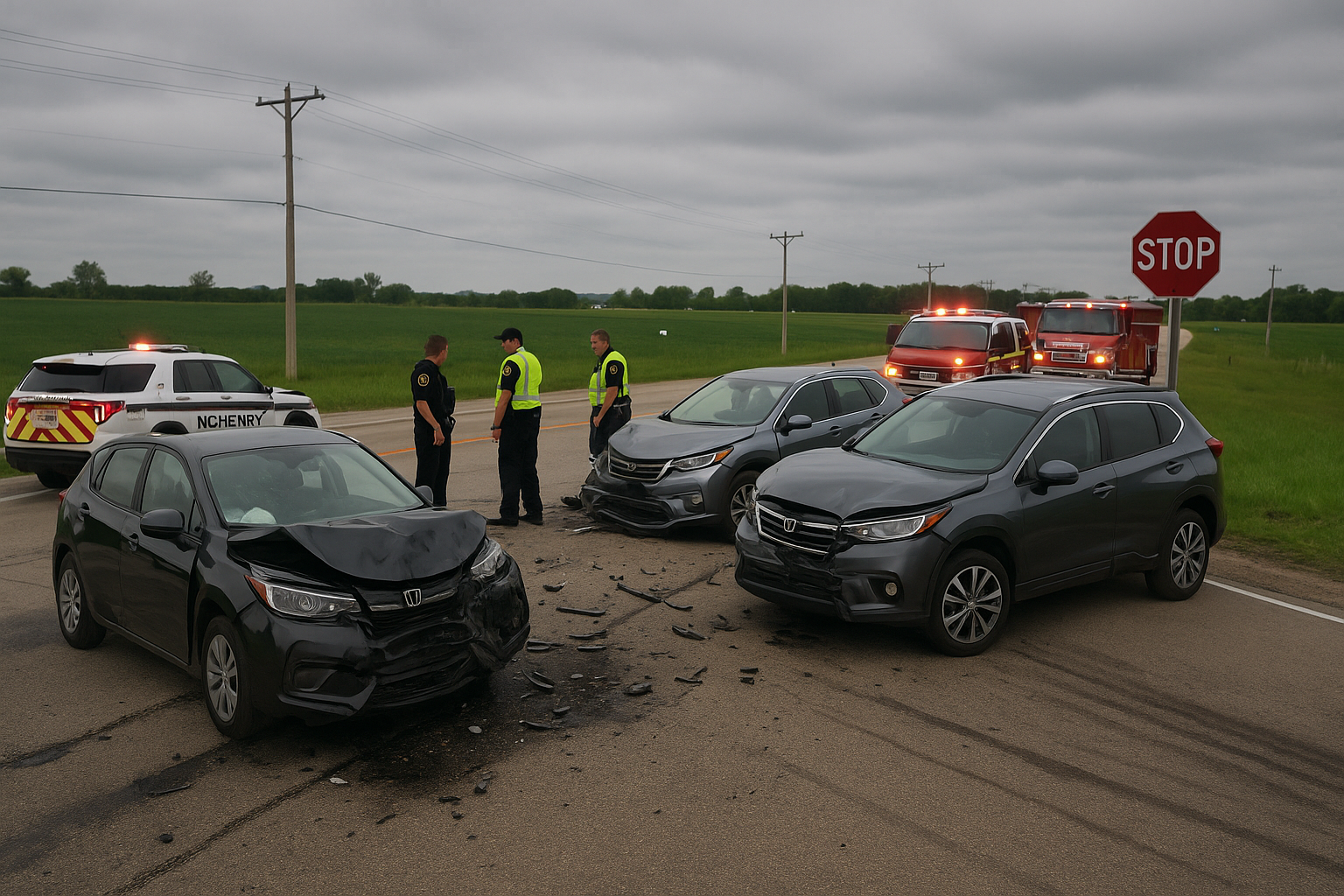
Linn County, KS (November 10, 2026) – A 52-year-old woman from Pleasanton was killed Monday afternoon, November 9, in a two-vehicle collision on East 300th Road in Linn County. According to the Kansas Highway Patrol (KHP), the fatal crash occurred around 3:45 p.m. when the woman braked to avoid a deer entering the roadway, lost control of her car, and collided with an oncoming pickup truck.
The accident occurred approximately one-eighth of a mile west of Quail Road, or 2.8 miles east of Kansas Highway 7, according to the crash location description, which identifies K-57 rather than K-7. The collision involved a 2004 Kia Rio driven by 52-year-old Lisa Gabrini of Pleasanton and a 1999 GMC New Sierra driven by 55-year-old James Daringer of Mound City.
Investigators reported that Gabrini was traveling eastbound on East 300th Road when a deer entered the roadway from the south ditch. She braked hard to avoid the animal, causing her Kia to veer left across the centerline and begin spinning counterclockwise. At the same time, Daringer was approaching from the opposite direction in his westbound GMC pickup.
The GMC struck the Kia along its front and passenger-side doors. Following the impact, the Kia spun clockwise, entered the north ditch, and came to rest facing southwest. The GMC continued westbound, rolled over once, and came to rest in the north ditch facing east.
Gabrini sustained fatal injuries in the collision. Her remains were transported to Schneider Funeral Home, and the Kansas Highway Patrol confirmed that her next of kin had been notified. Deputy Kieser of the Linn County Sheriff’s Office completed the notification at approximately 5:30 p.m. Monday.
Daringer was not injured in the accident, according to the preliminary report. Investigators confirmed that both drivers were wearing safety restraints at the time of the collision. The two vehicles were removed from the scene by Dave’s Towing.
The Kansas Highway Patrol classified the incident as a fatality crash. The report identifies the deer entering the roadway as the event that prompted the Kia driver’s braking maneuver. Authorities have not reported any additional contributing factors or indicated that either driver was cited.
The collision was investigated under Kansas Highway Patrol agency designation K225. Additional information about the vehicles’ movements or the circumstances surrounding the deer encounter may become available as the investigation continues.
Understanding Your Rights After a Fatal Deer-Related Car Accident in Kansas
Deer-related accidents can occur suddenly, leaving motorists with little time to react. When an animal enters the roadway, a driver may brake or swerve to avoid a collision. These emergency maneuvers can create additional dangers when a vehicle crosses into opposing traffic or leaves the roadway.
Fatal accidents involving wildlife may raise difficult questions about responsibility. The presence of a deer does not automatically establish that a driver was negligent, and a collision with another vehicle does not necessarily mean either motorist violated traffic laws. Investigators must consider the circumstances leading to the emergency and how the drivers responded.
Kansas law establishes requirements for drivers to exercise reasonable care and operate their vehicles safely. When negligence contributes to a fatal collision, surviving family members may have legal options under the state’s wrongful death laws. However, the availability of a claim depends on the evidence and applicable legal requirements.
Why Are Deer-Related Accidents Dangerous on Rural Kansas Roads?
Deer can enter roadways unexpectedly, particularly in areas surrounded by fields, wooded land, and drainage ditches. Drivers may have only a few seconds to recognize the animal and respond. Sudden braking or steering movements can affect vehicle stability and increase the risk of losing control.
Rural roads may present additional challenges because opposing traffic can be separated by only a centerline. A vehicle that crosses into the opposite lane may place approaching motorists in immediate danger. Even when a driver attempts to avoid an animal, the resulting maneuver can lead to a serious collision.
Deer-related crashes do not always involve direct contact with the animal. A driver may lose control while attempting to avoid the deer and strike another vehicle or roadside object. Investigators must examine the complete sequence of events to determine how the accident occurred.
In the November 9 Linn County collision, the Kia driver braked hard when a deer entered East 300th Road from the south ditch. Her vehicle crossed the centerline and spun before being struck by an oncoming pickup. The preliminary report does not indicate that either vehicle struck the deer.
What Should Drivers Do When a Deer Enters the Roadway?
When a deer appears ahead, drivers should generally reduce speed while maintaining control of their vehicle. Braking firmly when safe may reduce the severity of a potential collision. Sudden steering movements can create additional risks, particularly when another vehicle is approaching from the opposite direction.
Motorists should also remain alert for additional deer because the animals may travel in groups. A deer crossing the road may be followed by others. Maintaining an appropriate speed and watching roadside areas can provide additional time to recognize hazards.
However, drivers facing an unexpected animal may have very little time to react. The safest available response depends on vehicle speed, roadway conditions, surrounding traffic, and the animal’s position. An accident should not automatically be treated as evidence that the driver made an unreasonable decision.
In the Linn County accident, the Kia driver braked to avoid a deer entering from the south ditch. The vehicle then crossed the centerline and collided with an oncoming pickup. The Kansas Highway Patrol did not establish whether another response would have prevented the collision.
Can a Driver Be Held Responsible for a Crash Caused by a Deer?
A driver is not automatically negligent because a deer enters the roadway and an accident follows. Wildlife can create sudden hazards that are difficult to anticipate or avoid. Determining responsibility requires examining whether the driver acted reasonably under the circumstances.
Investigators may consider vehicle speed, visibility, traffic conditions, and the time available to respond. A driver who was already operating unsafely before encountering the animal may face different legal questions than someone who reacted to an unexpected emergency. However, these circumstances must be established through evidence.
Kansas law recognizes that a person’s actions must be evaluated in light of the circumstances they faced. An emergency may affect what constitutes reasonable conduct, but it does not automatically eliminate responsibility. The evidence must establish whether the driver’s response met the applicable standard of care.
In the November 9 collision, the Kansas Highway Patrol reported that a deer entered the roadway and prompted the Kia driver’s braking maneuver. The report does not identify speeding, distraction, or another traffic violation. The available information does not establish that either driver acted negligently.
What Happens When a Vehicle Crosses the Centerline?
Crossing the centerline can create a serious hazard because vehicles traveling in opposite directions may have little time to avoid a collision. Kansas law generally requires motorists to operate on the proper side of the roadway, subject to applicable exceptions. The circumstances of a centerline crossing may become important when determining responsibility.
A vehicle may cross the centerline because of driver error, mechanical failure, roadway conditions, or an emergency maneuver. The reason for the movement can affect the legal analysis. Investigators must determine what caused the vehicle to enter opposing traffic rather than relying solely on its final position.
A collision involving a vehicle that crossed the centerline may provide evidence about the accident sequence. However, it does not automatically establish negligence when the movement resulted from an unexpected hazard. The driver’s actions must be evaluated under the circumstances.
In the Linn County crash, the Kia crossed the centerline after its driver braked to avoid a deer. The vehicle spun counterclockwise before the westbound GMC struck its front and passenger-side doors. The report identifies the sequence but does not assign legal responsibility.
Why Are Side-Impact Collisions Particularly Dangerous?
Side-impact collisions can cause severe injuries because the sides of passenger vehicles provide less space between occupants and the point of impact than the front or rear of the vehicle. The severity depends on the impact forces, vehicle design, and location of the collision. Occupants seated near the struck side may face significant risks.
When a vehicle is spinning or moving sideways, its occupants may experience forces from several directions. The collision can also cause additional movement after the initial impact. These factors may contribute to serious injuries even when occupants are wearing seat belts.
A second vehicle may also lose control after a side-impact collision. Depending on the roadway and impact forces, it may enter a ditch or overturn. The resulting movements can create additional risks for occupants.
In the November 9 Linn County accident, the GMC struck the Kia’s front and passenger-side doors. The Kia then spun into the north ditch, while the GMC rolled once before coming to rest in the same ditch. The Kia driver sustained fatal injuries, while the pickup driver had no apparent injuries.
Can Families File a Wrongful Death Claim After a Deer-Related Accident?
Kansas law allows certain surviving family members to pursue wrongful death claims when a person’s death results from circumstances that would have supported a personal injury action if the person had survived. These claims are governed by K.S.A. § 60-1901 and related provisions. However, a fatal accident does not automatically establish that another party is legally responsible.
A wrongful death claim generally requires evidence showing that another party’s legally actionable conduct caused the death. When a collision involves an unexpected deer encounter, determining whether negligence occurred may be particularly important. The presence of an animal does not, by itself, establish a basis for compensation.
Potential damages may include qualifying financial losses and certain non-economic losses recognized under Kansas law. The availability and amount of compensation depend on the circumstances and applicable statutory requirements. Surviving family members may also face questions concerning insurance coverage and the parties responsible for the collision.
In the November 9 Linn County accident, Lisa Gabrini sustained fatal injuries after her Kia crossed the centerline and was struck by an oncoming pickup. The preliminary report does not establish negligence by another party. Any potential wrongful death claim would require additional evidence supporting legal responsibility.
How Does Kansas’ Comparative Fault Law Affect Fatal Accident Claims?
Kansas follows a modified comparative fault system under K.S.A. § 60-258a. Under this system, a claimant’s recoverable damages may be reduced according to the applicable percentage of fault. When the person whose conduct is at issue is found 50% or more responsible, recovery may be barred under the comparative fault statute.
Comparative fault may become relevant when multiple parties’ actions contribute to a collision. Investigators may examine the drivers’ movements, speeds, and responses to an unexpected hazard. However, the presence of a centerline crossing does not automatically resolve every question concerning fault.
Wrongful death claims may also involve comparative fault considerations. The legal analysis depends on the conduct of the deceased person and any other potentially responsible parties. These questions require evidence concerning the circumstances of the accident.
In the Linn County collision, the Kansas Highway Patrol identified the deer encounter and subsequent loss of control. The report does not establish that the GMC driver contributed to the accident or identify another negligent party. The available information does not support assigning fault percentages.
What Insurance Coverage May Apply After a Fatal Wildlife-Related Crash?
Automobile insurance coverage can depend on whether a vehicle directly strikes an animal or collides with another vehicle while attempting to avoid one. Comprehensive coverage may apply to certain direct animal collisions, while collision coverage may apply to vehicle impacts involving other vehicles or objects. The actual benefits depend on the policy terms.
Liability insurance may provide compensation when an insured driver is legally responsible for another person’s injuries or death. However, the presence of a fatality does not automatically establish that liability coverage is payable. Responsibility must be evaluated under the applicable legal requirements.
Kansas also requires certain automobile insurance coverages, including personal injury protection and uninsured/underinsured motorist coverage. The availability of benefits depends on the circumstances and policy provisions. Different coverages may address different losses arising from the same collision.
In the November 9 accident, the Kia was listed as insured by Progressive, while the GMC driver’s insurance status was recorded as unknown. The report does not provide policy limits or establish which benefits may apply. Additional verification would be necessary before determining available coverage.
What Evidence Is Important After a Fatal Deer-Related Collision?
Investigators may examine vehicle damage, tire marks, roadway debris, and the final resting positions of the vehicles. These details can help establish how the vehicles moved before and after impact. Evidence concerning the deer encounter may also become important when reconstructing the accident.
Witness statements may provide information about the animal’s movements and the drivers’ responses. Available camera recordings may also help establish the sequence of events. However, wildlife-related accidents on rural roads may occur without independent witnesses or recorded footage.
Vehicle inspections may help determine whether a mechanical problem contributed to the loss of control. Roadway conditions and visibility may also become relevant. Investigators must distinguish supported findings from possibilities that have not been established.
In the Linn County collision, the Kansas Highway Patrol documented the Kia’s braking maneuver, centerline crossing, and subsequent impact with the GMC. Both vehicles entered the north ditch, and the GMC overturned once. These findings establish the reported collision sequence but do not resolve every question concerning responsibility.
How Long Do Families Have to File a Wrongful Death Lawsuit in Kansas?
Kansas generally provides two years to file wrongful death lawsuits under K.S.A. § 60-513, subject to applicable accrual rules and exceptions. The deadline may differ in certain circumstances, and additional requirements may apply to particular claims. Families should not assume that every claim follows the same timeline.
Claims involving governmental entities may require separate notice procedures. Insurance policies may also establish reporting obligations that differ from court filing deadlines. Understanding the applicable requirements can become important when evaluating potential legal options.
Preserving evidence may become more difficult as time passes. Damaged vehicles may be repaired or disposed of, and witness memories may fade. Obtaining relevant records can help clarify how a fatal accident occurred.
In the November 9 Linn County collision, the Kansas Highway Patrol documented the death of a 52-year-old woman following a deer-related crash. The preliminary report does not establish that another party was negligent. The availability of a wrongful death claim would depend on additional evidence and applicable Kansas law.
PLEASE TAKE NOTICE
This article is based on a Kansas Highway Patrol crash report concerning a fatal two-vehicle collision on November 9, 2026. The accident occurred around 3:45 p.m. on East 300th Road, approximately one-eighth of a mile west of Quail Road in Linn County. A deer entered the roadway, prompting the driver of an eastbound Kia Rio to brake before crossing the centerline and colliding with a westbound GMC pickup.
- Woman killed: Lisa Gabrini, 52, of Pleasanton, sustained fatal injuries in the collision. Her remains were transported to Schneider Funeral Home, and the Kansas Highway Patrol confirmed that her next of kin was notified.
- Deer entered roadway: Investigators reported that a deer came onto East 300th Road from the south ditch. Gabrini braked hard to avoid the animal before her vehicle crossed the centerline and began spinning.
- Two vehicles involved: The accident involved a 2004 Kia Rio and a 1999 GMC New Sierra. The GMC struck the Kia along its front and passenger-side doors before both vehicles entered the north ditch.
- Pickup overturned: Following the collision, the GMC continued westbound, rolled once, and came to rest facing east. The 55-year-old pickup driver from Mound City sustained no apparent injuries.
- Vehicles removed: Dave’s Towing removed both vehicles from the accident scene. The preliminary report did not provide damage classifications for either vehicle.
- Investigation documented: The Kansas Highway Patrol investigated the collision under agency designation K225. Readers can review our frequently asked questions in Kansas and accident resources in Kansas for additional information about accident-related claims.
This article is intended for informational purposes only and does not constitute legal or medical advice. Information reflects the available Kansas Highway Patrol report and may change if authorities release additional findings. The report identifies a deer entering the roadway as the event preceding the collision but does not establish negligence or determine legal responsibility. Please review our disclaimer for further details.
Fatal wildlife-related accidents can leave families facing emotional and financial losses while trying to understand how a collision occurred. Kansas law establishes specific requirements for wrongful death claims, comparative fault, insurance coverage, and filing deadlines. A Kansas wrongful death lawyer can review the available evidence, explain applicable legal requirements, and discuss whether surviving family members may have grounds to pursue compensation when another party’s negligence contributes to a fatal accident.