 By Crash News Writer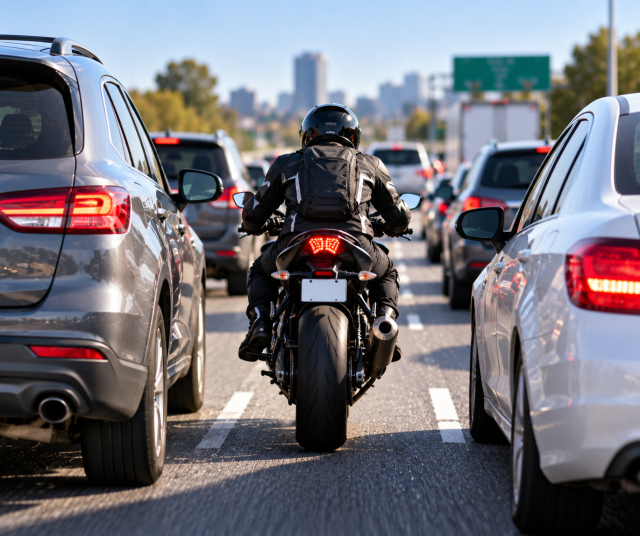
If you ride a motorcycle, sitting in heavy traffic can feel uncomfortable and even dangerous. Moving between rows of cars may seem like a practical way to avoid congestion, but whether you can legally do it depends heavily on where you are riding.
Motorcycle lane splitting laws are not uniform across the United States. California expressly recognizes lane splitting, while several other states permit more limited forms of lane filtering. In many other states, riding between lanes may violate traffic laws or expose a rider to a citation.
The legal question becomes even more important after an accident. A motorcycle rider is not necessarily responsible simply because a crash happened while the rider was traveling between vehicles. Investigators must consider state law, each driver’s actions, speed, traffic conditions, and the evidence surrounding the collision.
What Do Motorcycle Lane Splitting Laws Mean?
Lane splitting generally refers to a motorcyclist traveling between rows or lanes of vehicles moving in the same direction. You may have seen riders do this during slow highway traffic or heavy congestion.
Lane filtering is similar but usually involves a rider moving between stopped or very slow traffic under limited conditions. The legal distinction matters because some states that do not permit full lane splitting do allow lane filtering.
For example, Utah law specifically distinguishes the two practices. It defines lane splitting as riding between marked lanes while traffic is moving, while lane filtering involves overtaking a vehicle under more limited circumstances.
Because motorcycle lane splitting laws differ so much between states, you should check the current law where you are riding rather than assume the rules you know from another state apply.
Is Motorcycle Lane Splitting Legal in California?
California is the clearest example of a state recognizing lane splitting. California Vehicle Code Section 21658.1 defines lane splitting as driving a two-wheeled motorcycle between rows of stopped or moving vehicles in the same lane.
The California Highway Patrol specifically states that lane splitting by motorcyclists is legal in the state. It also warns riders that the danger increases as overall speeds and the speed difference between motorcycles and surrounding vehicles increase.
The fact that the practice is legal does not mean riders can ignore other traffic and safety laws. A motorcyclist can still be responsible for an accident caused by unsafe riding.
California’s motorcycle lane splitting laws also do not permit riding on the shoulder as if it were another form of lane splitting. The CHP states that shoulder riding is illegal and is not considered lane splitting.
What States Allow Lane Filtering?
Several states have adopted narrower rules allowing lane filtering under certain circumstances. These rules should not automatically be treated as permission for full lane splitting.
As of 2026, states including Arizona, Colorado, Minnesota, Montana, and Utah allow some form of motorcycle lane filtering, while their specific restrictions vary. California remains distinct in expressly recognizing full lane splitting between stopped or moving vehicles.
Utah offers a useful example of how limited these rules can be. Its current law allows qualifying lane filtering when the roadway has at least two adjacent lanes traveling in the same direction, the applicable roadway speed limit is 45 mph or less, the vehicle being passed is stopped, and the motorcycle is traveling no faster than 15 mph. The movement must also be made safely.
This shows why knowing the exact motorcycle lane splitting laws in your state matters. A maneuver that is legal under one state’s rules could violate another state’s traffic laws.
Does Legal Lane Splitting Mean the Motorcyclist Cannot Be at Fault?
No. Legal and safe are two separate questions.
Suppose a rider is legally permitted to travel between vehicles but does so carelessly. The rider could potentially be responsible if excessive speed, unsafe passing, distraction, or another negligent action causes an accident.
The California Highway Patrol advises riders that lane splitting becomes more dangerous as speeds and speed differences increase. It also recommends avoiding large vehicles and staying out of drivers’ blind spots.
Therefore, compliance with motorcycle lane splitting laws is only one part of a liability investigation.
An insurer, attorney, or court may examine whether everyone involved acted with reasonable care under the circumstances.
When Could a Driver Be Responsible for a Lane-Splitting Crash?
Drivers of passenger vehicles can also cause motorcycle accidents.
Imagine you are legally riding between lanes when a driver suddenly moves into your path without checking mirrors or blind spots. If the driver’s unsafe movement causes the collision, that driver could potentially be responsible.
Intentional behavior can be especially important. The California Highway Patrol warns drivers that intentionally blocking or impeding a lane-splitting motorcyclist in a way that could harm the rider is illegal.
Other actions that could contribute to an accident include distracted driving, unsafe lane changes, opening a vehicle door into a rider’s path, speeding, or failing to maintain proper awareness.
Liability depends on the evidence rather than simply whether a motorcycle was between two vehicles.
Can Both the Rider and Driver Share Fault?
Yes. Some crashes result from the actions of more than one person.
Suppose a motorcyclist is traveling between vehicles too quickly while another driver begins an unsafe lane change. Investigators might conclude that both actions contributed to the collision.
The consequences depend on state law. You can learn more about how comparative fault may affect a personal injury case and what shared fault after a car accident could mean for an injury claim.
Motorcycle lane splitting laws may be an important part of this analysis, but they are rarely the only factor considered.
What Evidence Can Help Establish Fault?
Evidence becomes extremely important when the motorcyclist and driver have different versions of what happened.
Photographs can document vehicle positions, motorcycle damage, road markings, debris, and surrounding traffic conditions. If you can safely take pictures after the crash, capture both close-up damage and wider views of the roadway.
Video can be especially powerful. Helmet cameras, motorcycle-mounted cameras, dashboard cameras, traffic cameras, and nearby business surveillance systems may have recorded the moments before impact.
Witness statements can also help determine whether the rider was traveling carefully or whether another vehicle made a sudden movement.
Police reports, vehicle damage, electronic vehicle information, and accident reconstruction may provide additional evidence when motorcycle lane splitting laws or rider speed become disputed.
Does Breaking a Lane-Splitting Law Automatically Make the Rider Liable?
Not necessarily.
Violating a traffic law can be significant evidence in an accident investigation, but determining legal responsibility for injuries may involve additional questions. The rules governing negligence and the effect of a traffic violation vary by jurisdiction.
Consider a rider who is splitting lanes where the practice is prohibited. At the same time, another driver intentionally swerves into the motorcycle.
The rider’s actions could become relevant, but the driver’s actions would also need to be investigated. Liability may depend on whether each person’s conduct contributed to causing the crash.
If you were injured, a personal injury claim generally involves harm to your body, emotions, or reputation rather than damage to property alone. The rules for establishing negligence and recovering compensation depend on the jurisdiction and circumstances.
What Should You Do After a Lane-Splitting Motorcycle Crash?
Your immediate priority should be safety and medical care. Motorcycle crashes can cause serious injuries even when the vehicles were traveling at relatively low speeds.
Call for emergency assistance when necessary and report the collision as required by local law. If you can safely do so, photograph the motorcycle, other vehicles, roadway, traffic conditions, and visible injuries.
Try to obtain contact information from witnesses. A neutral witness may have seen whether the motorcycle was traveling between stopped or moving vehicles or whether another driver suddenly changed lanes.
You should also preserve helmet-camera or motorcycle-camera footage immediately. Digital evidence can sometimes be overwritten or lost.
Our accident resources can provide additional information about issues you may face following a serious collision.
How Insurance Companies May Evaluate the Crash
An insurance company will usually want to understand exactly how the collision occurred.
The adjuster may ask whether you were splitting or filtering lanes, how fast you were traveling, whether surrounding vehicles were moving, and where the impact occurred. The insurer may also review state motorcycle lane splitting laws to determine whether the maneuver itself was permitted.
Be accurate when describing what happened, but do not guess about speed, distance, or other facts you cannot remember.
Insurance companies may also investigate the other driver’s conduct. Phone records when legally obtainable, vehicle data, dashcam recordings, witnesses, and physical evidence could help establish whether distraction, speeding, or an unsafe lane change contributed to the crash.
Why State Law Makes Such a Big Difference
Motorcycle riders frequently travel across state lines, but traffic rules can change the moment you enter another jurisdiction.
A maneuver permitted in California might violate the law elsewhere. Even states that allow filtering can impose strict conditions involving traffic speed, motorcycle speed, road configuration, and other requirements.
For example, Utah law currently permits qualifying filtering but generally prohibits operating a motorcycle between lanes outside that exception.
That is why you should review current motorcycle lane splitting laws before riding in an unfamiliar state. Laws can also change, making current state transportation agencies, highway patrol agencies, or state statutes the best places to verify the rules.
Frequently Asked Questions
Lane splitting can create confusing legal questions because the rules differ significantly from state to state. These answers address some of the issues riders and their families commonly have after an accident.
Is Motorcycle Lane Splitting Legal Everywhere?
No. Motorcycle lane splitting laws vary considerably by state, and California is the clearest state permitting full lane splitting between stopped or moving vehicles. Several other states allow only more restricted lane filtering, so you should check the current rules for the state where you plan to ride.
Is Lane Filtering the Same as Lane Splitting?
Not always. Lane filtering generally describes moving between stopped or very slow vehicles under specific conditions, while lane splitting commonly involves traveling between lanes of moving traffic. State statutes may define these terms differently, so the legal definition in your jurisdiction controls.
Is a Motorcyclist Automatically at Fault While Lane Splitting?
No. Investigators still need to determine what caused the collision and whether the rider or another driver acted negligently. Whether the motorcycle maneuver was legal is an important factor, but it does not necessarily answer every question about liability.
Can a Driver Be Liable for Hitting a Lane-Splitting Motorcycle?
Yes, depending on the circumstances. A driver who makes an unsafe lane change, intentionally blocks a rider, or otherwise drives negligently could potentially bear responsibility. Video, witnesses, vehicle damage, and applicable traffic laws may help establish what happened.
What Should I Save After a Motorcycle Accident?
Preserve photographs, videos, witness information, police documentation, medical records, repair records, and insurance communications. Save helmet-camera or motorcycle-camera footage in more than one location when possible. These records may become important if liability is disputed.
Protect Your Rights After a Motorcycle Lane-Splitting Crash
A motorcycle crash involving lane splitting can quickly turn into a complicated dispute about traffic laws, speed, visibility, and each person’s actions. Do not assume you are automatically responsible simply because you were riding between vehicles, and do not assume the other driver is automatically liable either.
Understanding the motorcycle lane splitting laws that applied at the time of your crash is an important starting point. Preserving evidence and documenting your injuries can also help you understand what happened and protect your ability to pursue a claim.
If you or a loved one suffered injuries in a lane-splitting or lane-filtering collision, you can speak with a qualified personal injury attorney about the laws in your state, insurance disputes, possible compensation, and your legal options.